Hong Kong Travel Guide
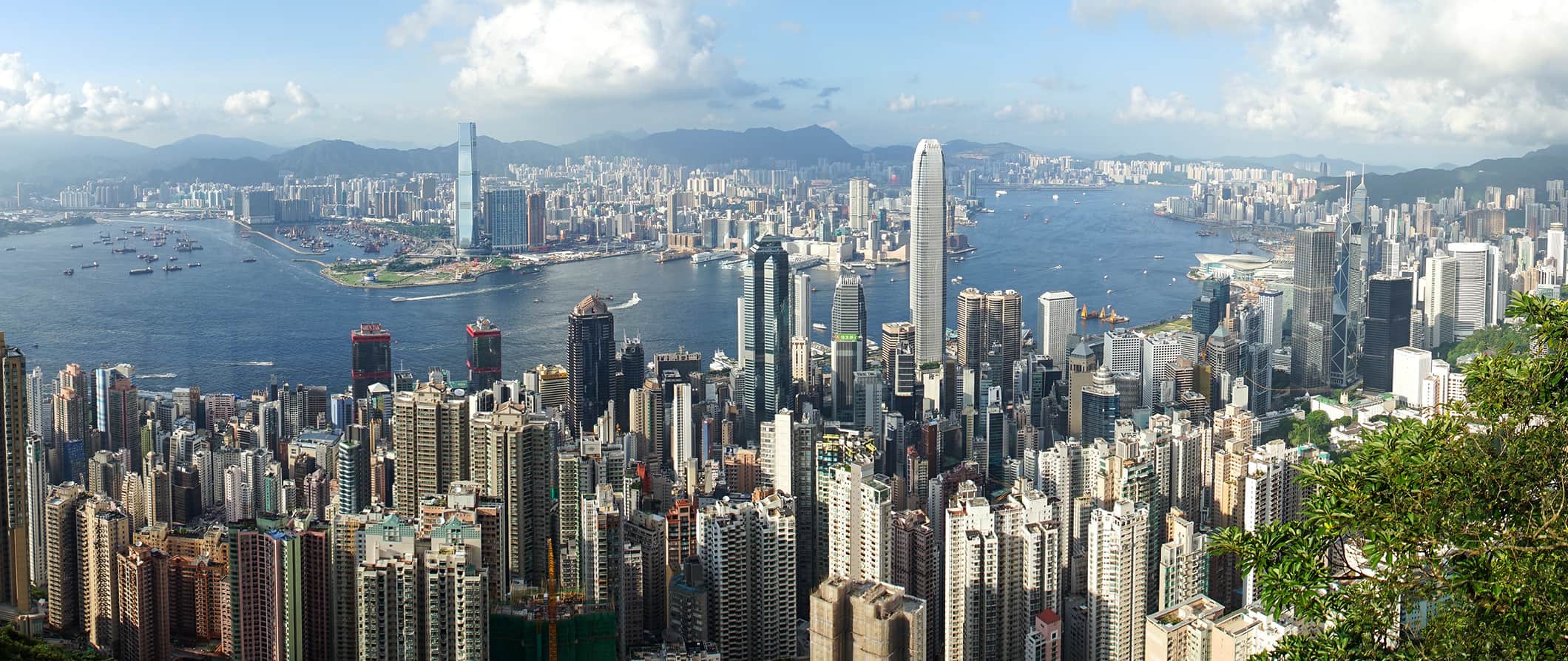
Hong Kong is one of the most densely populated places on earth. Composed of three main regions (Hong Kong Island, Kowloon, and the New Territories) as well as over 260 additional islands, the country is home to a whopping 6,300 people per square kilometer. It is one of my favorite cities in the world. I can’t get enough of the city, and if you are a foodie like me, it’s heaven!
From traditional street markets and beautiful temples to the fast-moving, skyscraper-dotted streets, to the endless food and drink options, there is so much to do here. I recommend at least three days if you can.
This Hong Kong travel guide to plan your trip and get the most out of one of the most vibrant, eclectic, and diverse cities in the world.
Click Here for City Guides
Top 5 Things to See and Do in Hong Kong
1. Visit the temples
There are a lot of traditional temples throughout the city. Visit the Miu Fat Buddhist Monastery, Lo Pan Temple, Sha Tin Che Kung Temple, Man Mo Temple, or the Yuen Yuen Institute. Miu Fat and Lo Pan are my two favorites. They are windows in the rich cultural history of the city and are very beautiful. (Also, don’t miss the Ten Thousand Buddhas Monastery!)
2. Take the Star Ferry
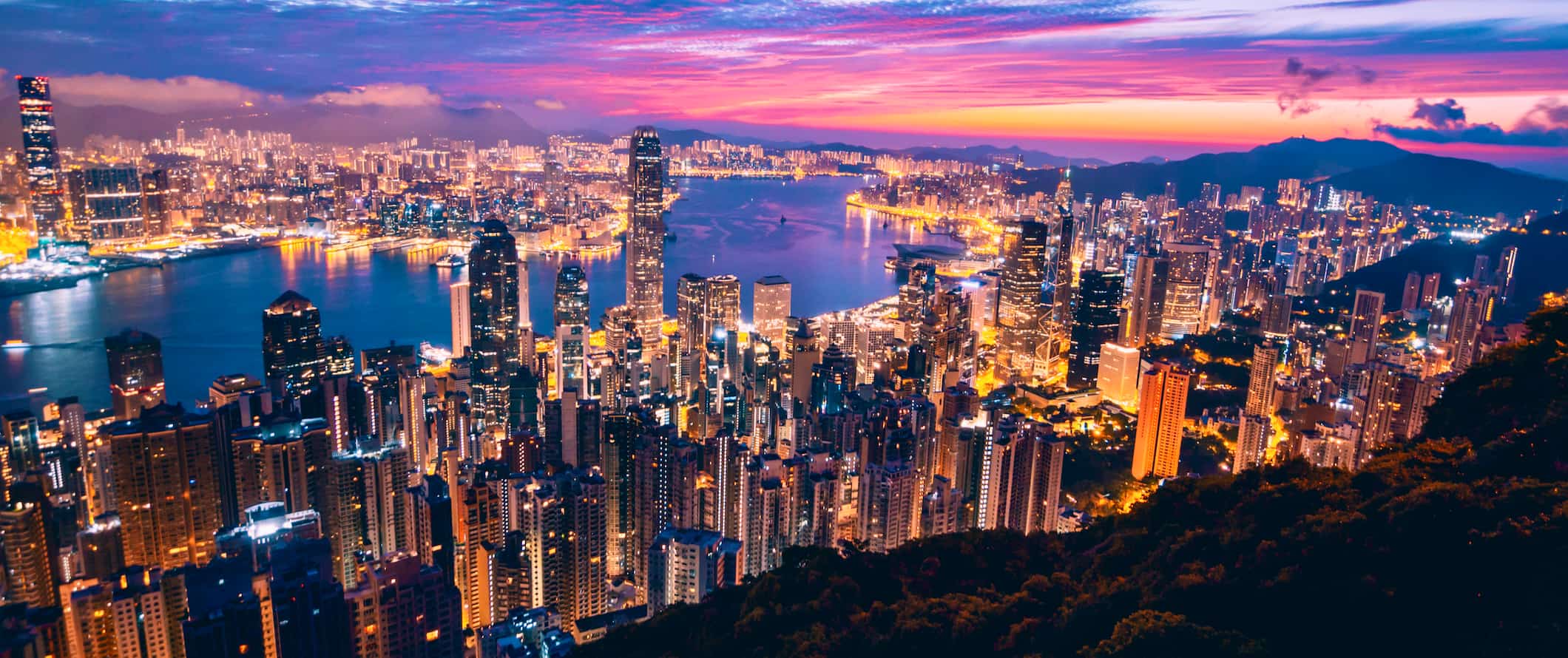
This is the best way to cross the harbor from Kowloon Island to Hong Kong Island. Opened over 130 years ago, it moves over 700,000 people per day. While you’ll likely need to ride the Star Ferry just to get around, it also makes for a fun activity in and of itself. Be sure to do it at night when the city lights are aglow!
3. Ride Ngong Ping 360
This cable car stretches over 5.7 kilometers (3.5 miles) from Tung Chung across the bay toward the airport and then onward to Lantau Island. The cable car gives you a panoramic view of the airport, harbor, and entire city before it travels through the surrounding mountains. The ride lasts about 25 minutes. When you get to the top, don’t miss the nearby Po Lin Monastery (a Buddhist monastery founded in 1906) and Tian Tan, a 34-meter (111-foot) bronze Buddha statue that sits on the top of the island’s peak. While Lantau Island is a bit touristy, the ride, views, and monastery make it worth the trip. You can reserve tickets online in advance here.
4. Visit the street markets
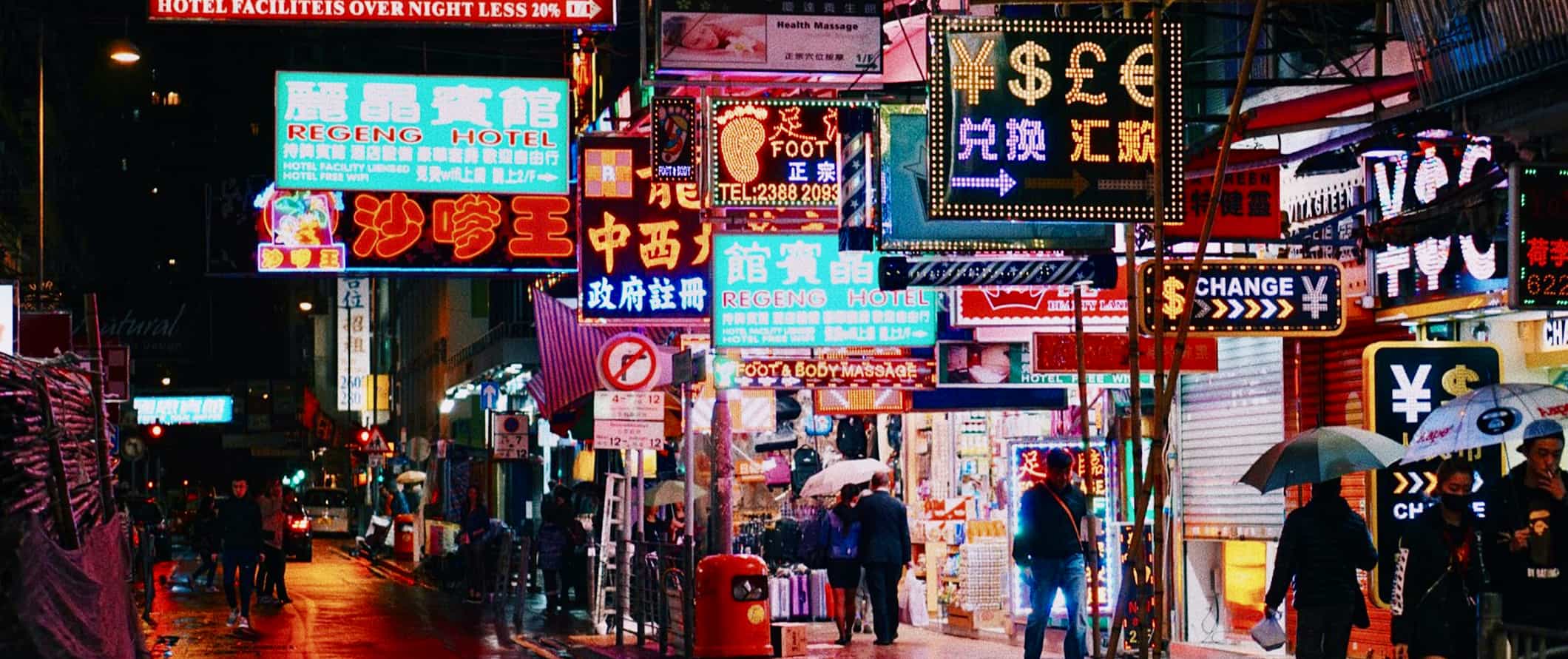
The best places to soak up the atmosphere, busy vibe, sights, and sounds of Hong Kong. The best markets to go to are the Ladies Market, Temple Street Night Market, and Stanley Market. You’ll find everything you need here (as well as lots of food). Hong Kong is a food-filled city (there are over 15,000 restaurants here!) so consider taking a food tour to help you navigate these markets!
5. Ride the Peak Tram
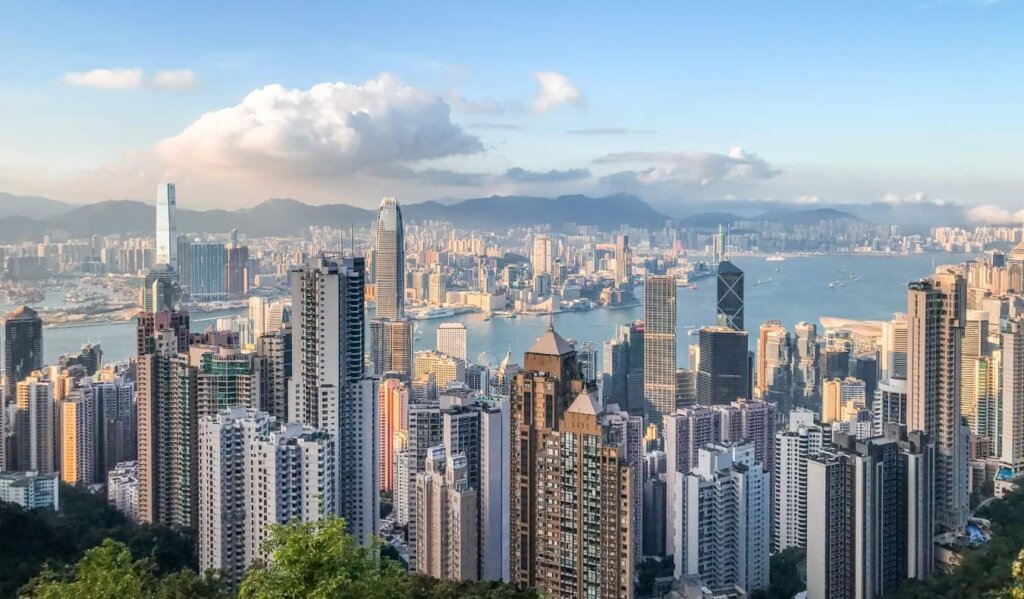
This tram, which has been in operation since 1888 (with several renovations since then), takes you to the top of the Peak, Hong Kong Island’s largest mountain. At the top, you’ll enjoy spectacular 180-degree views of the skyscrapers of Victoria Harbor, Kowloon, and the surrounding hills. It’s the best view of the city. You’ll also find many different hiking trails you can do around the mountain (some lasting hours). At any of the other trailheads, you can take the bus down the mountain. You can also walk down from the tram station or just take the tram itself back down.
Other Things to See and Do in Hong Kong
1. Sheung Wan District
Famous for its bird’s nest and shark fin soup (which you should not eat), this area reflects the old Hong Kong. High-end apartment and office blocks tower over small stores and traditional markets and it’s less developed with modern buildings than other parts of the city. The area is a glimpse into the past and is cool to walk around for a little while.
2. Jungle trekking
Outside the congested heart of the city, you’ll find lots of places to explore nature. You can explore or trek along one or more of the eight different “geo-areas” distributed across the Sai Kung Volcanic Rock Region and Northeast New Territories Sedimentary Rock Region. Both areas provide a great place to experience a side of the city that few people ever see because they don’t escape the hustle and bustle of the city!
3. Have fun at Disneyland
If you’re on a family trip, or even if you’re a backpacker in touch with your inner child, head to Disneyland for a fun-filled day of rides, attractions, and junk food! Opened in 2005, the park has dozens of attractions, including fan favorites like the spinning teacups and Jungle Cruise. Located on Lantau Island, you can reach the park in just 20 minutes by car. It’s super easy to get to (you can take public transportation there in around 45 minutes). You can get your tickets here.
4. Tsim Sha Tsui Waterfront
Stroll along the Tsim Sha Tsui waterfront and take in the breathtaking skyline view of Hong Kong Island. While you’re here, make sure to visit the Avenue of Stars, Hong Kong’s answer to the Hollywood “Walk of Fame.” Here you can also find a statue of Bruce Lee, take the Star Ferry across the harbor, or visit the Hong Kong Museum of Art. Established in 1962, it was the first public art museum in the city. The museum isn’t huge but it features a lot of regional and Chinese artists. There are both rotating temporary exhibitions as well as a permanent collection where you’ll find everything from Chinese ceramics, terra cotta, rhinoceros horns, traditional calligraphy, and Chinese paintings, to contemporary art produced by Hong Kong artists. There are over 17,000 items in the collection, so there is a lot to see!
Additionally, you can visit the Hong Kong Space Museum. Opened in 1980, it’s located inside a huge egg-shaped building (it’s a really odd-looking building). While the building is peculiar, the museum itself is both fun and insightful (and a good choice if you’re traveling with kids as it’s very interactive). It’s home to astronomy exhibits, a digital planetarium, interactive shows in their Omnimax theatre, and lots of hands-on exhibitions. It’s definitely one of the most interesting museums in the city.
5. Mai Po Natural Area
This endless stretch of mangrove forest and muddy swampland is a paradise for birds and invertebrates. Over 430 kinds of birds have been documented here and the area is protected from development. Since it’s a protected area, the World Wildlife Federation’s public guided tours are the only way to experience the area. Tours are Fri–Sun (starting at 9:30am), last tour at 2:30 pm. From October to April, you can even watch the annual migrations. It’s another option to see more than just the buildings of HK.
6. Explore Tung Shoi Street
Also known as Ladies Street, this open-air bazaar is situated in the central area of Mong Kok. It is one of the busiest places in Hong Kong and is filled with shops and cheap goods. Remember to bargain!
7. Experience the nightlife at Lan Kwai Fong
LKF is the main nightlife and party area in Hong Kong and is filled with tons of bars, clubs, shisha, and cheap drinks. Nights out here are wild and crazy and the place is packed any night of the week. If you’re looking to get wild, you can’t go wrong here. 001, Solas, Dragon I, and 6 Degrees are a few places I like to visit in the area when I’m looking for a night out.
8. Hike the Dragon’s Back
This trail is easily accessible from the city and is a nice way to spend a day outside the hustle and bustle of the city. The trail will take around 4 hours and is moderately difficult, so be sure to bring lots of water. There are also plenty of other trails in and around the city, too!
9. Rent a junk boat
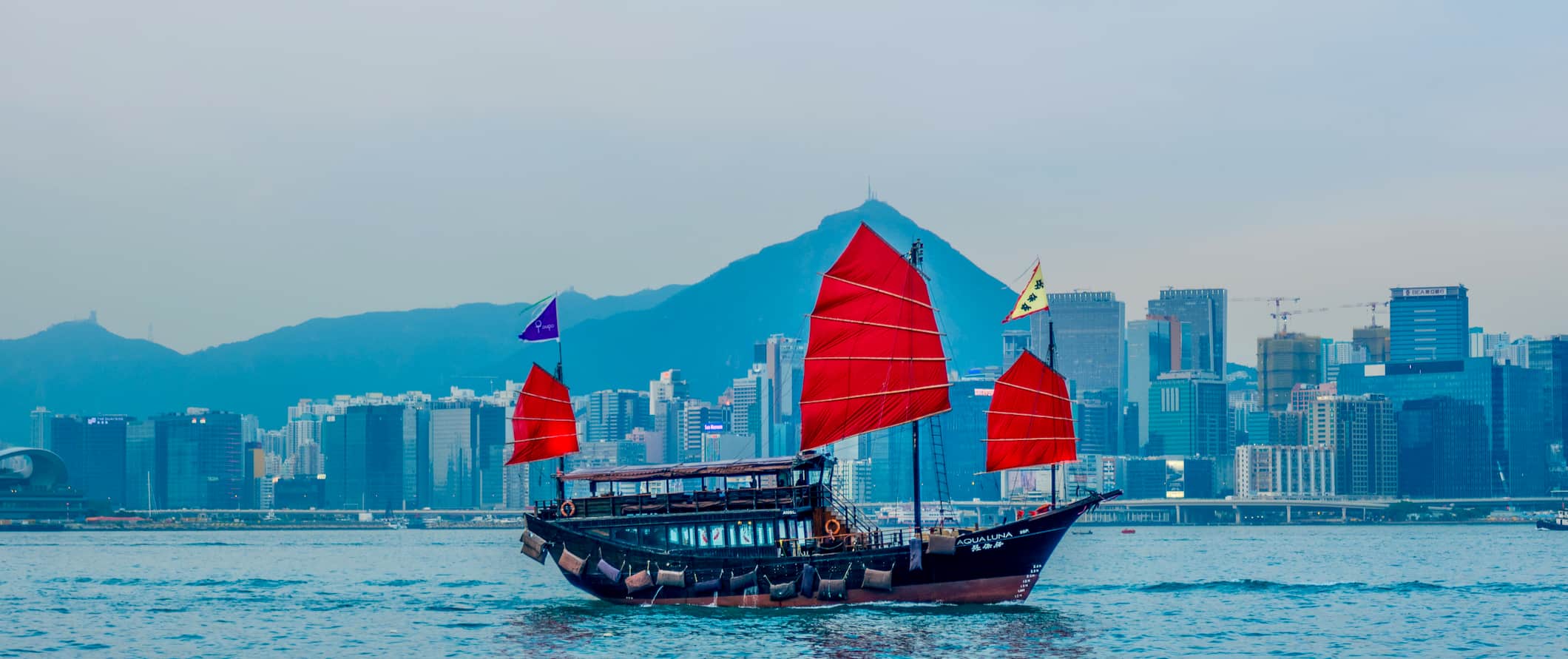
Don’t let the name fool you! Junk boats are a traditional Chinese sailboat that are still in use today, mostly just for tourists to cruise the bay in. There is only one traditional junk boat left: the Duk Ling. It was built in the 1950s and was originally used as a fishing boat. In the 1980s, it was refurbished and turned into the classic touring junk that it is today. You can get your tickets here.
10. See a show
The popular Broadway Cinematheque is the place to go for indie films; it is also home to the Korean Film Festival (as well as other high-profile film festivals). For a deeper cultural experience, attend the Yau Ma Tei Theatre for some Cantonese opera.
11. Kowloon Park
Kowloon Island’s gigantic park that features a swimming pool, a fitness center, little ponds where you can watch ducks and other swimming birds, a Chinese garden, an aviary, and the Hong Kong Heritage Discovery Centre (not to be confused with the Hong Kong Heritage Museum; more on that museum below). There are also plenty of rest areas here where you can relax to escape the oppressive Hong Kong heat. Spanning 13 hectares (33 acres), it’s one of the best places to people-watch in the city.
12. Hong Kong Heritage Museum
One of my favorite museums in the city is the Hong Kong Heritage Museum. It provides a look at the artistic culture of the city. Opened in 2000, this museum showcases the city’s history and love of art. There’s a large exhibit about the New Territories and an opera house for performances. It’s also located near the beautiful Sha Tin Park and Shing Mun River, making the surrounding area just as interesting as the museum!
13. Hong Kong Museum of History
This museum is a nice counterpoint to the Heritage Museum. After the Chinese government took control of Hong Kong during COVID, this museum was closed and renovated to better express the opinions of the government and their new security law. The new exhibits focus heavily on China bringing “order” to the city and on their “innovative” new security measures. After you go through that section, you’ll get to the section on the history of Hong Kong, which, while a bit sanitized, does give a good overview of the city’s history and importance to global trade. There’s also a big exhibit on Chinese immigration to the United States.
How to Stay Safe in Hong Kong
The crime rate in Hong Kong is relatively low, but you should still take precautions in crowds and on public transportation as those are the spots where pickpockets are most common. In addition to rare instances of petty theft, there are also numerous scams perpetrated on tourists, from fake monks to overcharging taxi drivers, but nothing that will endanger you physically. If approached by a “monk” offering small trinkets or “blessings,” just politely decline. Real Buddhist monks do not travel the streets hawking goods to tourists. For more, read about the 14 major travel scams to avoid.
Overall, Hong Kong is a safe place to backpack and travel – even if you’re traveling solo, and even as a solo female traveler. Petty theft (including bag snatching) is the most common type of crime, and even that is not very common.
Since 2020, the Chinese government has exerted a lot more control over life in Hong Kong and has installed its own leaders in the government while cracking down heavily on pro-democracy movements. While Hong Kong citizens are generally more open about talking politics than their mainland brethren, it’s still better to be careful with what you say.
The most important piece of advice I can offer is to purchase good travel insurance. Travel insurance will protect you against illness, injury, theft, and cancellations. It’s comprehensive protection in case anything goes wrong. I never go on a trip without it as I’ve had to use it many times in the past. You can use the widget below to find the policy right for you:
Where to Stay in Hong Kong
Hostels and guesthouses are plentiful in Hong Kong, ranging from the boutique to the downright squalid. You have a lot of options for budget accommodations and, in this city, you get what you pay for! Here are my recommended places to stay (that aren’t squalid):
For more hostel suggestions, here’s a list of my favorite hostels in Hong Kong!
Hong Kong Travel Costs
Accommodation
- Hostel dorms – 225–400 HKD per night
- Hostel private rooms – 450–800 HKD per night
- Budget hotels – 350–700 HKD per night
- Luxury hotels – 750–1,000+ HKD per night
- Airbnb private rooms – 350–600 HKD per night
- Airbnb apartments – 500–1,000+ HKD per night
Food
- Dim sum – 25-40 HKD per dish
- Lunch sets – 70-100 HKD
- Noodles – 35-50 HKD
- Sit-down restaurants – 100 HKD per dish
- Western food (pasta/steak/etc.) – 80-200 HKD
- Fast food – 45-55 HKD
- Beer – 35-50 HKD
- Glass of wine – 40-100 HKD
- Cocktails – 70-100 HKD*
- Coffee / Tea – 8-15 HKD
- Water – 10 HKD
- Groceries for a week – 400 HKD
A few of my favorite restaurants in the city are Butao Ramen @ Central, Din Tai Fung, Dim Sum Square, Chôm Chôm, Maison Libanaise, Tuk Tuk Thai, Mak’s Noodles, and Lan Fong Yuen.
*Note: If you want fancy cocktails at upscale cocktail bars, expect to pay 130 – 200 HKD.
Hong Kong Suggested Budgets
Backpacker – 700 HKD Per Day
A backpacking budget covers a hostel dorm, eating out food occasionally but mainly cooking your own meals, using public transportation, and participating in basic activities like visiting museums. Add about 300 extra per day if you plan to eat out or drink more often.
Midrange – 1,400 HKD Per Day
On a mid-range budget, you can stay in budget hotels, eat out at affordable restaurants, use public transportation, enjoy a few nights out at the bar, and do more paid activities and excursions. You won’t be living large but you won’t want for anything either.
Upscale – 3,500+ HKD Per Day
On this budget, you can stay in nice hotels, Uber everywhere, do more guided tours, visit any attraction, and eat out for every meal. This is just the ground floor! If you want to spend a lot of money, you can!
Hong Kong Travel Guide: Money-Saving Tips
Hong Kong packs a lot of activities into a small amount of space — and that space is expensive! Prices here are much higher than most of the region but there are still some ways you can save money. Here are my tips to keep your budget intact:
Eat at the buffets – Many restaurants offer an all-you-can-eat menu for less than 110 HKD. They usually consist of noodle dishes, dim sum, and/or dumplings, making it a cheap and filling meal that provides a ton of value.
Avoid staying on Hong Kong Island – If possible, avoid staying on the island of Hong Kong. Kowloon and the other islands have much cheaper accommodation! If you do end up on Hong Kong Island, Causeway Bay has most of the cheapest accommodation.
Visit the markets – Most locals shop at the markets as they offer the cheapest and freshest foods, at times up to 50% cheaper than grocery stores. Do all your grocery shopping here (especially when buying produce).
Stay in Chungking Mansion – While a far cry from even a 1-star hotel, Chungking Mansion offers the cheapest accommodation in the city. It’s not the nicest place (far from it) but it’s certainly an experience, as 4,000 other people also call the “mansion” home.
Use hospitality networks – Since accommodation is expensive in Hong Kong, consider using Couchsurfing, a site that connects travelers with locals offering a free place to stay to encourage cross-cultural exchange. There are a lot of hosts (both locals and expats) who take part in the community, so you can almost always find one.
Get a transit day pass – Trains in Hong Kong can add up quickly as fares are based on distance. Getting a day pass will be much more economical if you are traveling all over the city and into the New Territories. A day pass is 75 HKD for adults and 35 HKD for children.
Skip the taxis – While taxi fares are not astronomical, the hectic traffic will make your bill add up quickly. Public transportation is affordable and reliable. Skip the taxis!
Buy an Octopus Card – While this doesn’t necessarily save money, it makes your life a lot more convenient, which is why 99% of the residents in Hong Kong use them. The card is a contactless payment tool that simplifies the process of buying things like tickets on public transportation (MTR, light rail, buses, ferries, trams, etc.), so you don’t have to carry around coins or pay in exact change. You can use it for virtually all forms of public transportation, at
convenience stores, restaurants, shops, and tourist attractions. It acts like a pre-paid debit card. Get it to save you time.
How to Get Around in Hong Kong
Public transportation – Public transportation in Hong Kong, known as the MTR, is fast, safe, and reliable. A tourist travel pass costs 75 HKD per day (35 HKD for kids) and covers unlimited travel on the metro, tram, and light rail service. Individual tickets are based on distance and range from 5–58 HKD, so a day pass is your best option if you’re going to be traveling a lot or traveling long distances. Public transportation generally runs daily from 6am–1am.
Ferry – The Star Ferry is the main ferry that serves Hong Kong, having opened over 130 years ago. It runs between Hong Kong and Kowloon Island and costs 4–5 HKD during the week and 5–6 HKD on weekends/holidays. It runs daily from 6:3am–11:30pm.
To/From the Airport – There is a train to the airport (Airport Express Line) that departs every 10 minutes and costs 105–120 HKD per person (one way). The journey takes around 25 minutes.
Taxi – If you need to take a taxi, prices start around 29 HKD and go up by around 8 HKD per kilometer. Uber is your best bet for getting around if you don’t want to use public transportation as it’s cheaper than taxis.
To/From Shenzhen – Buses are available from Hong Kong to Shenzhen (the city in mainland China across the border), costing around 75 HKD per person (one way). The journey takes around one hour. Trains are also available to Shenzhen, China for around 75–130 HKD per person (one way). The ride takes around 30 minutes.
Car Rental – With world-class public transportation and very cramped, busy driving conditions, I would not suggest travelers rent a car unless they have a very explicit need for one.
When to Go to Hong Kong
Because of its subtropical location, Hong Kong’s weather is generally mild in winter and uncomfortably hot and humid in summer. The best time to go is between November and March when the heat and humidity aren’t as bad. November and December are particularly good for finding reasonably priced accommodations. Tourism traffic starts getting busier after the New Year.
Generally, the summer months are not a good time to visit Hong Kong, as there is the added threat of typhoons. The temperatures in the summer can get up to 31°C (88°F), which may not sound like a lot, but the humidity can be severe.
If you’re arriving during one of the major festivals or holidays (like Chinese/ Lunar New Year), you’ll want to book accommodations and tours well in advance. These can be some of the busiest times in Hong Kong, so plan accordingly. That being said, getting swept up in the chaos and fun atmosphere of the city during this time can be well worth it, if you don’t mind the price increase or the large crowds.
Hong Kong Travel Guide: The Best Booking Resources
These are my favorite companies to use when I travel. They consistently have the best deals, offer world-class customer service and great value, and overall, are better than their competitors. They are the companies I use the most and are always the starting point in my search for travel deals.
- Skyscanner – Skyscanner is my favorite flight search engine. They search small websites and budget airlines that larger search sites tend to miss. They are hands down the number one place to start.
- Hostelworld – This is the best hostel accommodation site out there with the largest inventory, best search interface, and widest availability.
- Booking.com – The best all around booking site that constantly provides the cheapest and lowest rates. They have the widest selection of budget accommodation. In all my tests, they’ve always had the cheapest rates out of all the booking websites.
- Get Your Guide – Get Your Guide is a huge online marketplace for tours and excursions. They have tons of tour options available in cities all around the world, including everything from cooking classes, walking tours, street art lessons, and more!
- SafetyWing – Safety Wing offers convenient and affordable plans tailored to digital nomads and long-term travelers. They have cheap monthly plans, great customer service, and an easy-to-use claims process that makes it perfect for those on the road.
- LifeStraw – My go-to company for reusable water bottles with built-in filters so you can ensure your drinking water is always clean and safe.
- Unbound Merino – They make lightweight, durable, easy-to-clean travel clothing.
- Top Travel Credit Cards – Points are the best way to cut down travel expenses. Here’s my favorite point earning credit cards so you can get free travel!
Hong Kong Travel Guide: Related Articles
Want more tips for your trip? Check out all the articles I’ve written on Hong Kong travel and continue planning your trip: